
Dr. Moumita Das
OFF-DUTY DISPATCH | UNCLASSIFIED SATIRE
Abstract/Summary
In the theater of national security, we are often transfixed by competition, cyber warfare, and geopolitical brinkmanship. Yet, the foundational strength of a nation is frequently tested in its micro-societies—the gated residential colonies, civil-servant enclaves, and localized economies where the apparatus of state crime intersects with the honest citizen. This article examines a seemingly innocuous local conflict involving a tea vendor, bureaucratic red tape, and an abuse of administrative privilege, translating these events into a compelling study on institutional vulnerability, asymmetric power struggles, and the indomitable resilience of the human spirit at the grassroots level.
The Story
It was a funny sight that greeted Menasha on her way home in the shopping complex of a colony. Birju had hung up a mosquito net over his open tea stall and was sitting inside it!
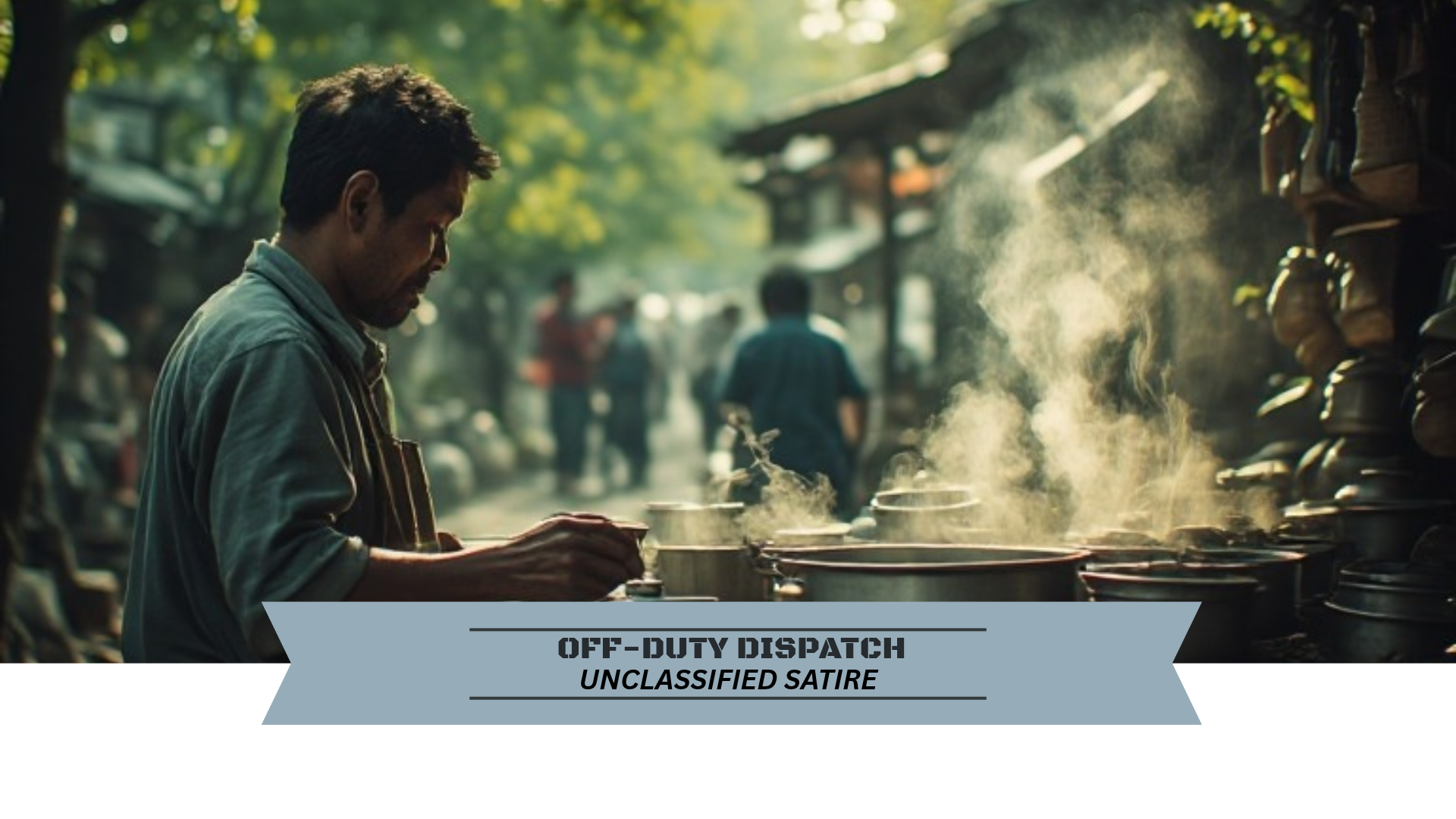
Birju – a short, dusky man of tribal origins with a mild and simple nature, who would not even think of hurting a fly – had come to the colony of office-bearers in search of employment and was eventually employed as a mali (gardener) at one of the offices. After office hours, he would make tea and snacks, such as pakoras and samosas, with yummy green chutney, and would sell them to the inhabitants of the colony. He had set up a stall for this purpose, which was essentially a platform of stone slabs with a tin roof. People thronged to his stall to have the varieties of pakoras he used to make. Initially, his customers were the chauffeurs and the clerks of the office who resided in the colony. Gradually, the other employees of the office, who were of a slightly higher rank, were also spotted buying Birju’s pakoras and samosas.
There was a subtle division in the colony based on the ranks of the employees. The employees of the higher ranks did not easily mix with those of the lower ranks (clerks and attendants). When Birju’s stall opened, the officers had sniffed at it with disdain and looked down upon the clerks who bought snacks from the stall. They were of the opinion that the snacks were made in the open with flies swarming over them, which would spread infection in the colony. Meanwhile, the clerks’ evenings with their families were becoming happier with Birju’s delicious samosas and pakoras. With the increasing reputation of the samosas and pakoras, the families of the officers were yearning for a bite. So, they began sending their domestic help to buy Birju’s snacks, and every evening Menasha could spot a gaggle of domestic help patiently waiting at the stall for their turn.
Birju was a happy man now, with a wide, toothy grin always on his face. He had now engaged an employee too: the colony washerman’s 13-year-old son, Mohan. Mohan was the home delivery boy who would go in the evenings to the houses of the officers with several packets of snacks. Birju was now dreaming of expanding his business. He began to prepare momos, which is originally a dish of Northeast India. Although the momos tasted funny, and far removed from their original taste, the people lapped them up, be it the clerks or the officers. Life was good for Birju. Then tragedy struck!
One day, Menasha was buying vegetables from Girijalal, owner of a vegetable stall nearby, when Birju came up to her with a piece of paper and a pen. “What is this?” asked Menasha. Girijalal said, “Birju’s stall has been shut down by the authorities. The officers are saying that he is spreading infection in the colony. He wants to send a petition to the authorities so that he may be allowed to reopen his stall. So, he is collecting signatures from everyone. Please sign on the paper.” Menasha signed. She did not care for the snacks that much, but at the same time did not want poor Birju to lose his stall. Several people coming to buy vegetables at Girijalal’s also signed the paper. Two months passed. Birju’s stall remained shut. Then one day Menasha caught the funny sight of Birju busy at work, sitting on the platform inside the mosquito net. “So, finally he got permission from the authorities to reopen his stall,” thought Menasha. But it took two months! Red tape was active in his case too! But why the mosquito net, of all things?
That evening, Menasha got the real news. Apparently, Birju had unwittingly antagonized the wife of an officer. She had been ordering snacks every day from Birju for several months, and that too without paying for them. When Mohan went to ask for payment, the lady got angry and refused to pay. She further threatened him that she would shut down the stall. She fabricated the story of his snacks spreading infection and, taking advantage of her position as an officer’s wife, she managed to shut the stall down. Menasha was aghast. People could stoop to such levels!
Menasha now looked at the timid Birju in a new light. She remembered the time when he had patiently collected signatures from his supporters with a soft smile on his face. He had not given up! What persistence and resilience of spirit!
The next day, Menasha was buying vegetables and could not help laughing at Birju conducting business from inside the mosquito net. She asked him, “Will the mosquito net save the snacks from infection?”
“We do not know about that,” quipped Girijalal, “but the mosquito net will definitely save him.”