

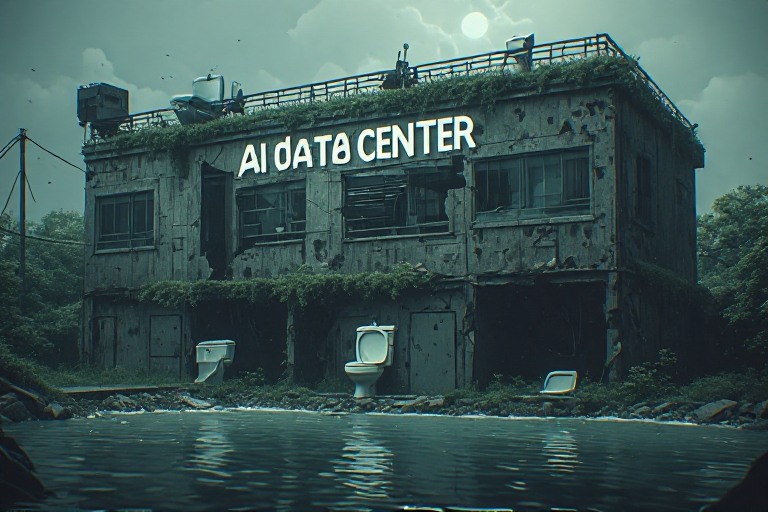
Abstract. In the modern era, the global economy has been swept up in a fringe fever known as the “AI gold rush.” Multi-billion dollar corporations are constructing massive buildings they claim “AI Data Centers.” They promise these buildings are the brains of the future—hubs for artificial intelligence that will solve all human problems. However, a closer look reveals that these buildings are essentially giant, thirsty machines that gulp down millions of gallons of water to keep their processors from melting. This paper argues that the “AI Data Center” is a short-term architectural scam. Once the water table runs dry and the cooling systems fail, these massive, climate-controlled, plumbing-heavy concrete shells are destined to become the largest ever public toilets in human history.
Introduction
We are currently witnessing a period of industrial gaslighting. Tech fringes tell us that these gargantuan warehouses are essential for “progress.” They claim these centers hold the future of humanity within their server racks. But let us look at the facts: these facilities are nothing more than glorified heaters that require enough water to sustain small towns. By draining our local reservoirs to keep their microchips cool, these companies are accelerating the very water shortages they claim to be solving through purported “innovation.”
The Great Water Consumption Scam
The “AI Data Center Scam” relies on a fundamental misunderstanding of thermodynamics. Computers get hot. To stop them from catching fire, you need to cool them down. The most efficient way to cool them? Water.
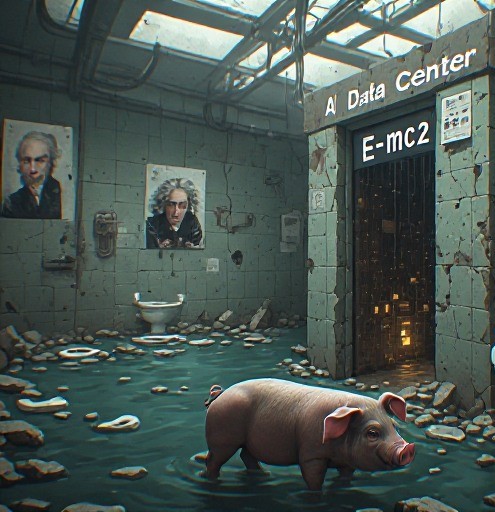
These facilities are essentially giant, humidifiers. They suck up local groundwater, pump it through their systems, and evaporate it into the sky. It is a brilliant business model: companies get to call themselves “futuristic,” while the surrounding communities get the privilege of fighting over the last few drops of water in their faucets. When the water runs out, these buildings will lose their primary utility. They will be massive, hollowed-out empty boxes.
The Transition: Architectural Repurposing
What happens to a massive, climate-controlled, plumbing-intensive building when the “AI bubble” bursts or the water reserves are depleted? It would be a waste to tear them down. In a future defined by extreme water scarcity, the primary need of the population will not be “calculating large language models,” but rather, basic sanitation.
These buildings are already equipped with piping systems, high-capacity cooling infrastructure, and large, secure, windowless rooms. If we simply rebrand these facilities as “Restrooms,” we provide a much-needed social service. They are already designed to handle throughput and volume, albeit of data rather than… other materials.
Restrooms as the New Reservoir
As we face the inevitable climate crisis, the AI data center will transition from a consumer of water to a sanctuary for it. Because these buildings are built to be self-sustaining, they are the perfect candidates for rainwater harvesting and massive filtration systems. The same cooling pipes that once chilled server racks will eventually distribute reclaimed water for the public good.
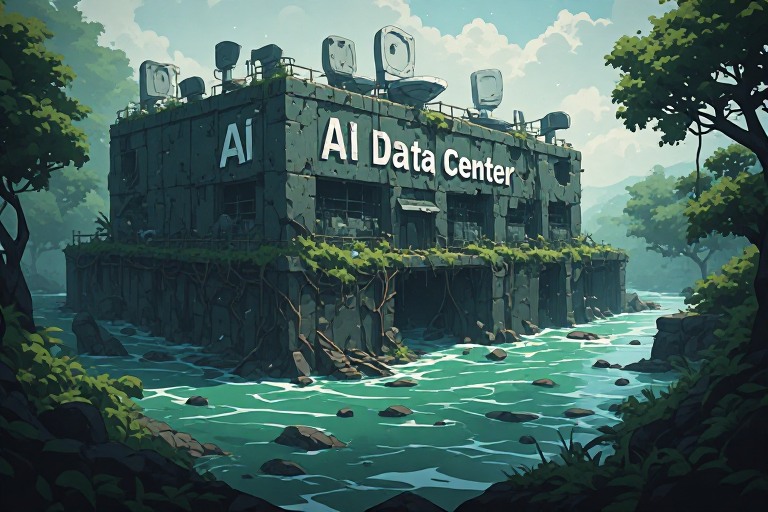
Citizens will no longer flock to these centers to upload code; they will flock to these centers to relieve themselves in architectural splendor. It will be the ultimate irony: the buildings that once caused the water shortage will become the only places where the public can access a functioning flush toilet.
Conclusion
The AI Data Center is not the brain of the future; it is the restroom of the future. By recognizing this now, we can save ourselves the trouble of pretending that these buildings are doing anything more than making us thirsty. History will remember these structures not as the birthplace of artificial intelligence, but as the final, restrooms of a thirsty civilization. We should stop promoting these “Data Centers” and start protecting our sovereignty today.